For those of you who know Neil well, (Mark & Sally!) you’ll know that art isn’t his thing.
Neil writes, “Wow…..in four months this incredible park has been the highlight of my trip so far, it made my feel quite inadequate just like seeing the Gaudi Cathedral in Barcelona, visiting the Miro Museum and reading Roald Dahl to the kids. These men were truly inspiring to a artistic Neanderthal like me”.
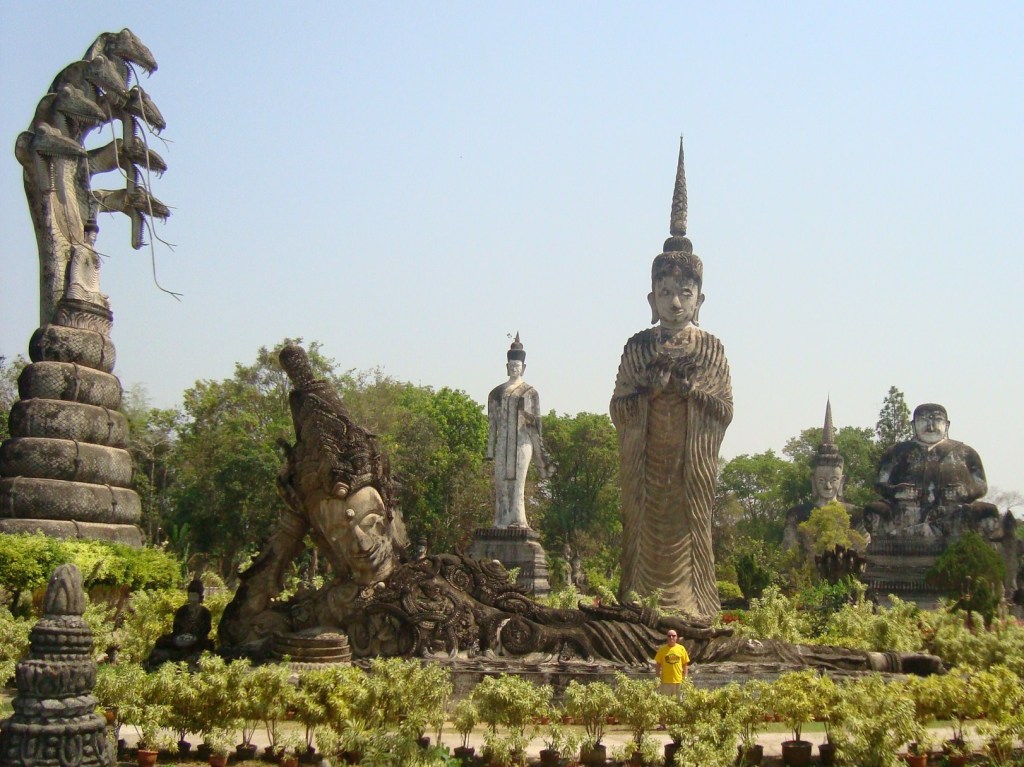
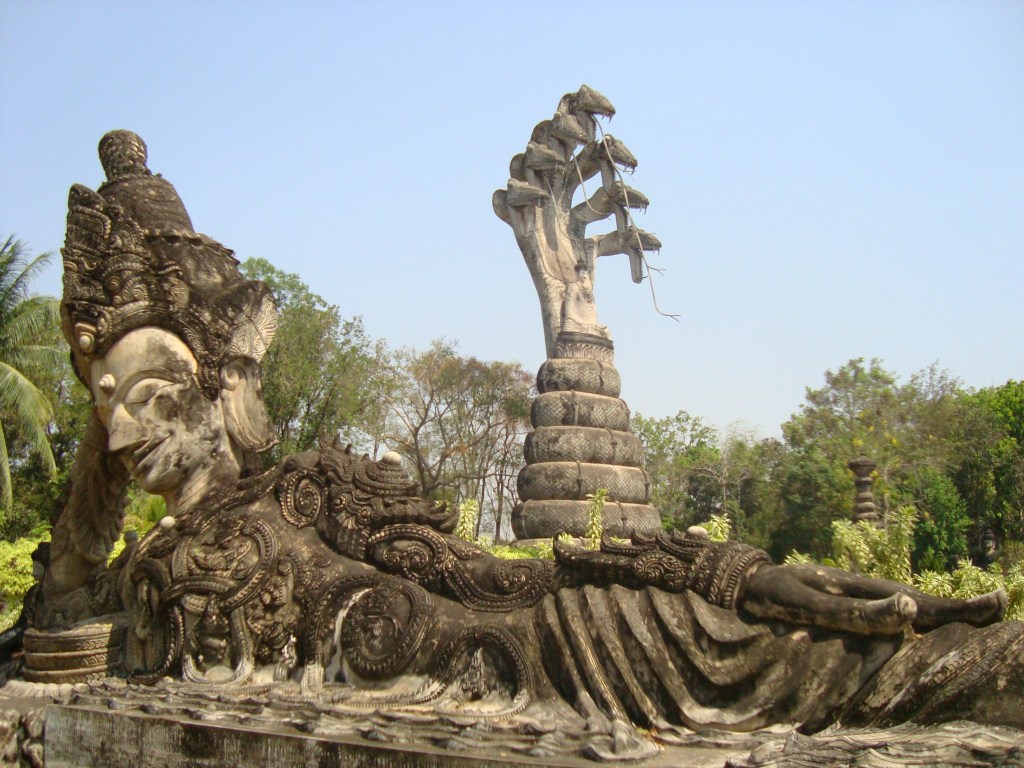
Nong Khai’s most enigmatic attraction is the Sala Kaew Ku Sculpture Park. It’s a surreal sculptural journey into the mind of a mystic shaman. Built over a period of 20 years from 1975 by Luang Pu Boun Leua Sourirat who died in 1996. The park features a weird and wonderful array of gigantic sculptures ablaze with Hindu-Buddhist imagery.
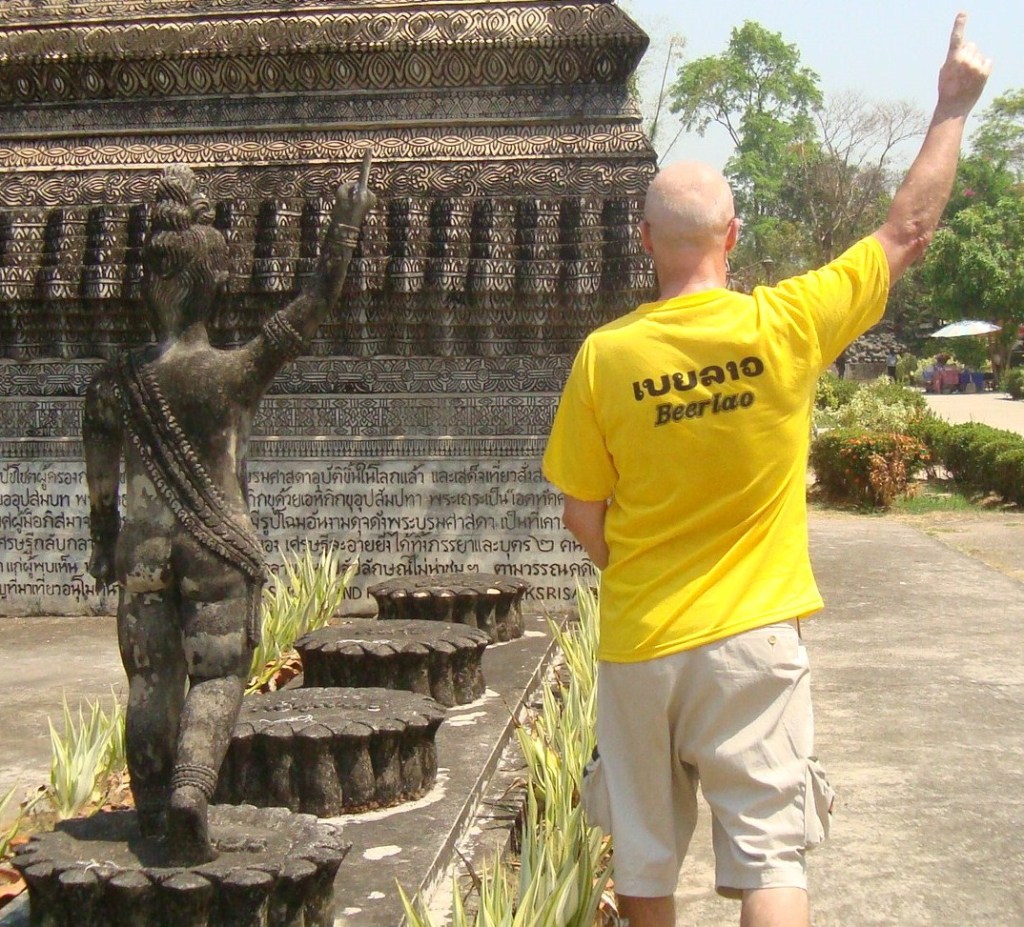
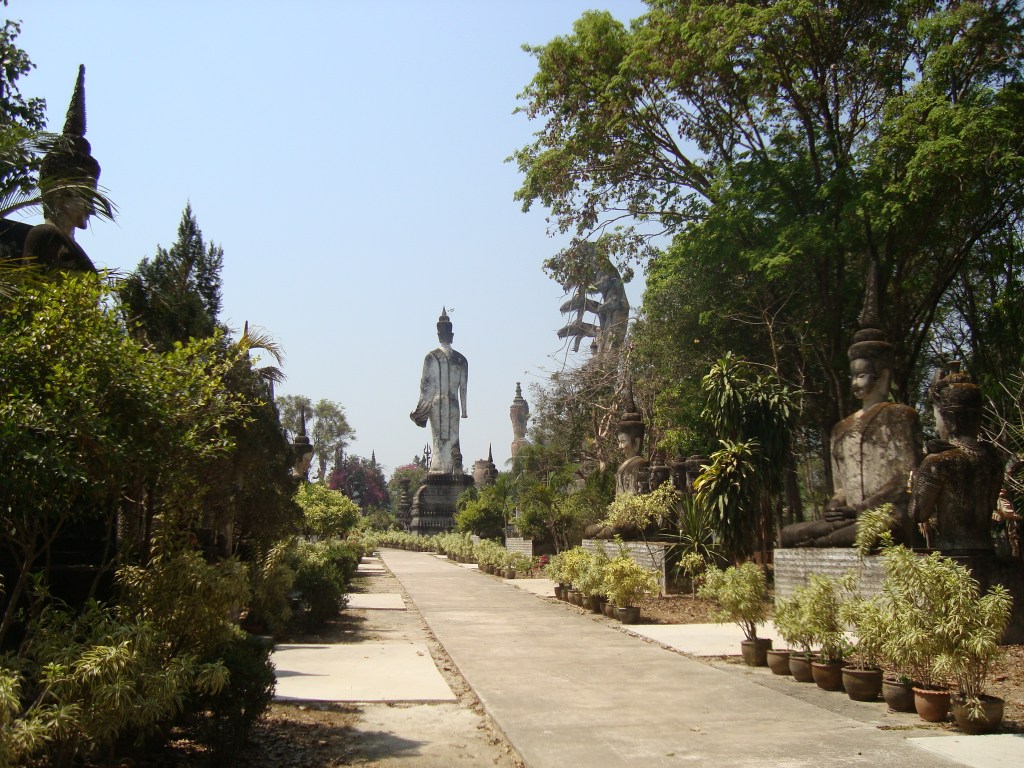
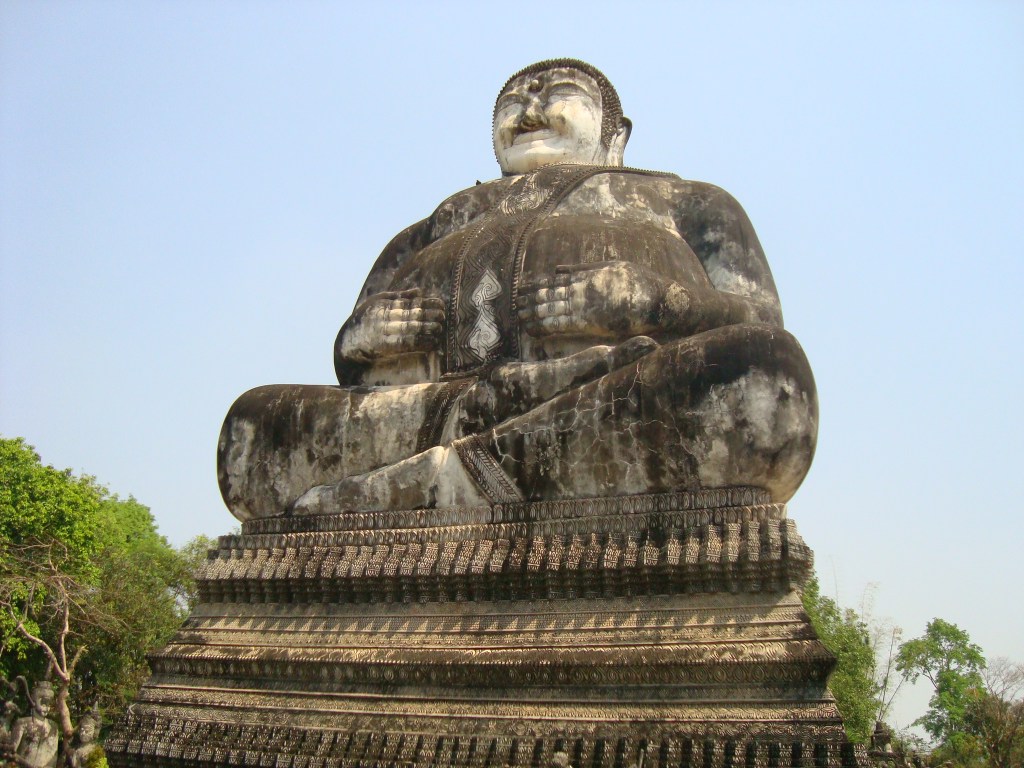
As his own story goes, Luang Pu, a Lao national, tumbled into a hole as a child, where he met an ascetic named Kaekoo. K introduced him into the manifold mysteries of the underworld and set him on course to become a Brahamanic yogi-priest-shaman (whatever that might be!). Shaking up his own unique blend of Hindu and Buddhist philosophy, mythology and iconography, Luang Pu developed a large following in north eastern Thailand where he had moved to following the 1975 communist takeover in Laos where he had been working on a similar project. (It still exists but we didn’t visit).
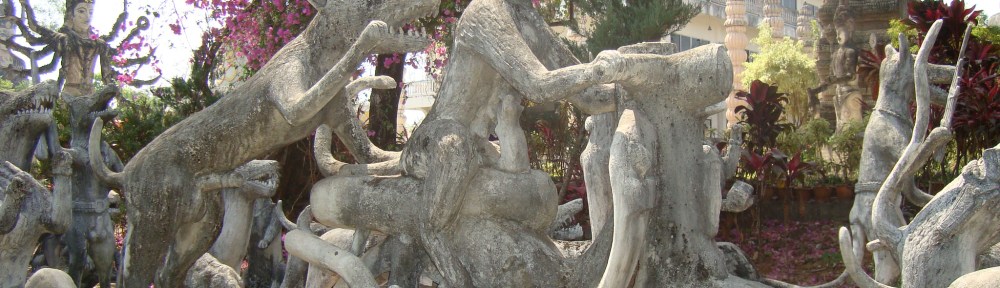
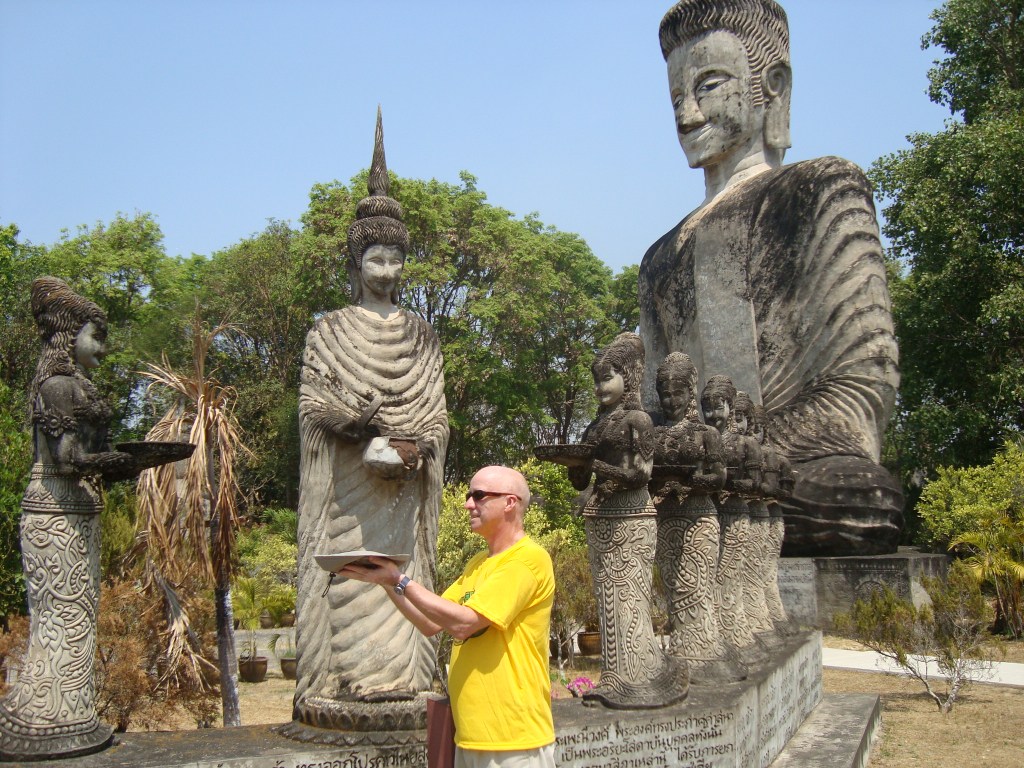
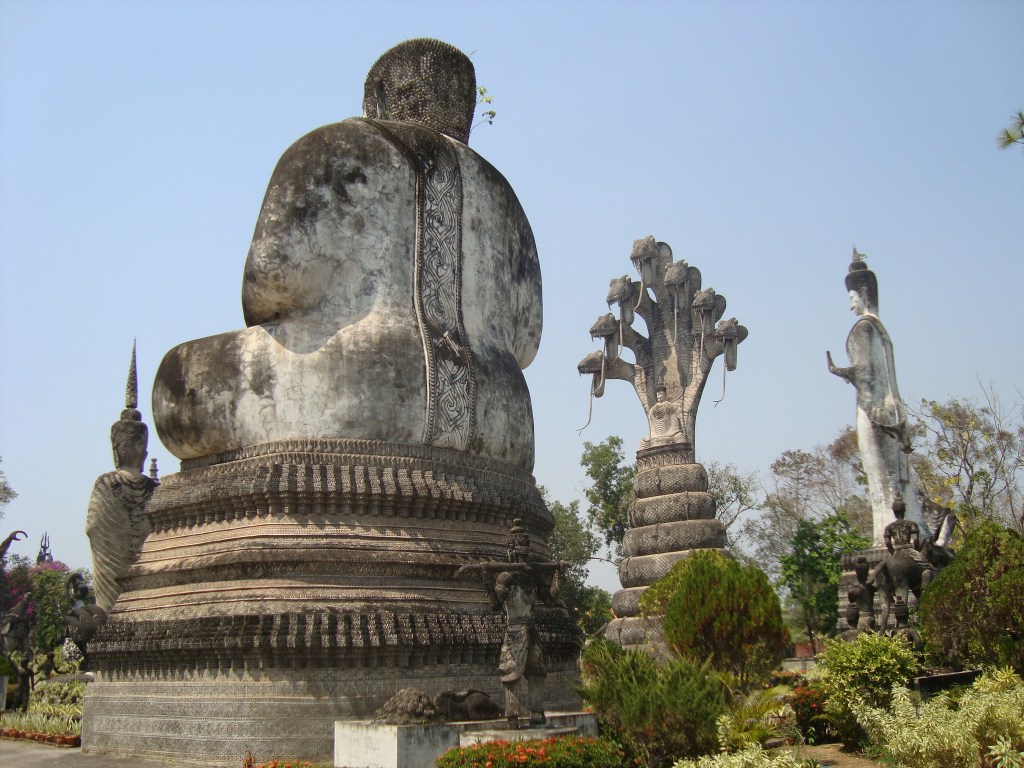
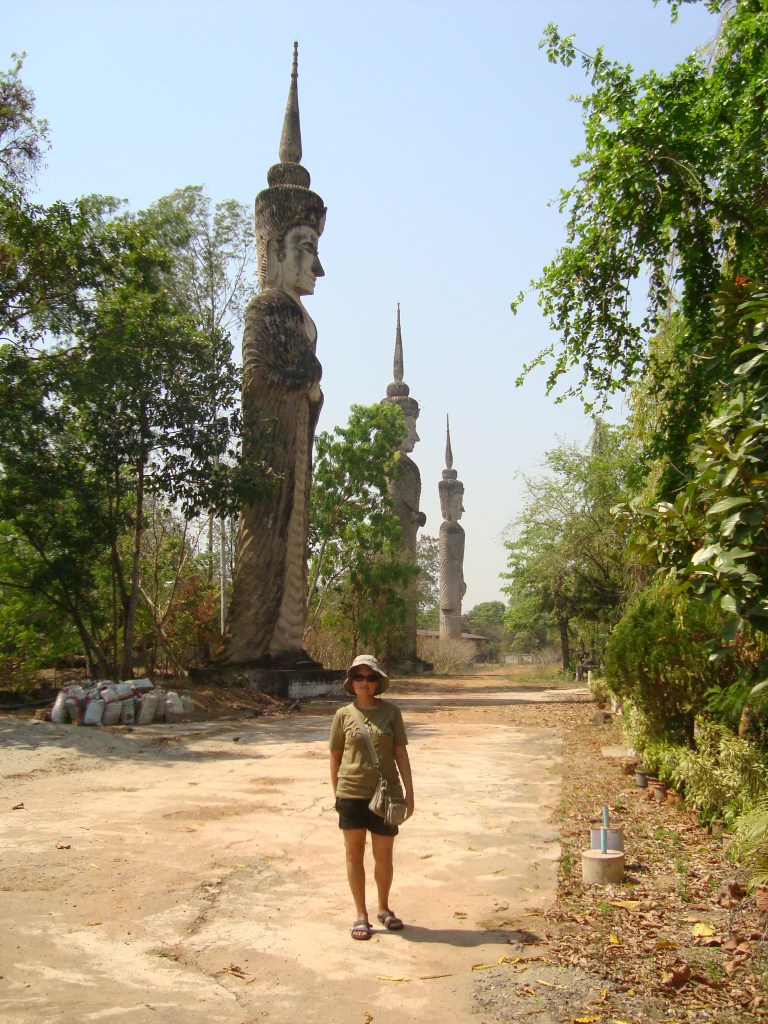
The park is a real smorgasbord of bizarre cement statues of Shiva, Vishnu and Buddha and every other Hindu and Buddhist deity imaginable, as well as numerous secular figures, all supposedly cast by unskilled artists under his direction. At the entrance to the park there are two very large unfinished statues. Some of the sculptures are quite amusing, the serene and stately elephant wading through a pack of anthropomorphic (yes I did have to look this up) dogs. (see pics). The tallest sculpture, a Buddha seated on a coiled Naga with a spectacular multi-headed hood, is more than 25 metres high.



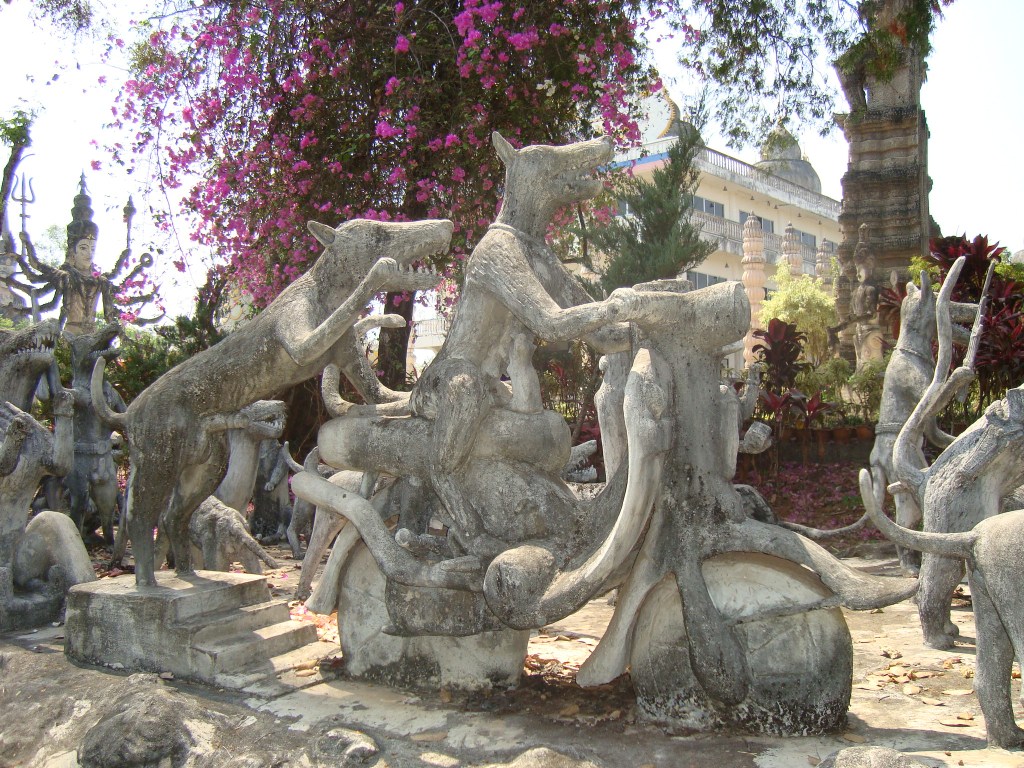
Dog on a scooter 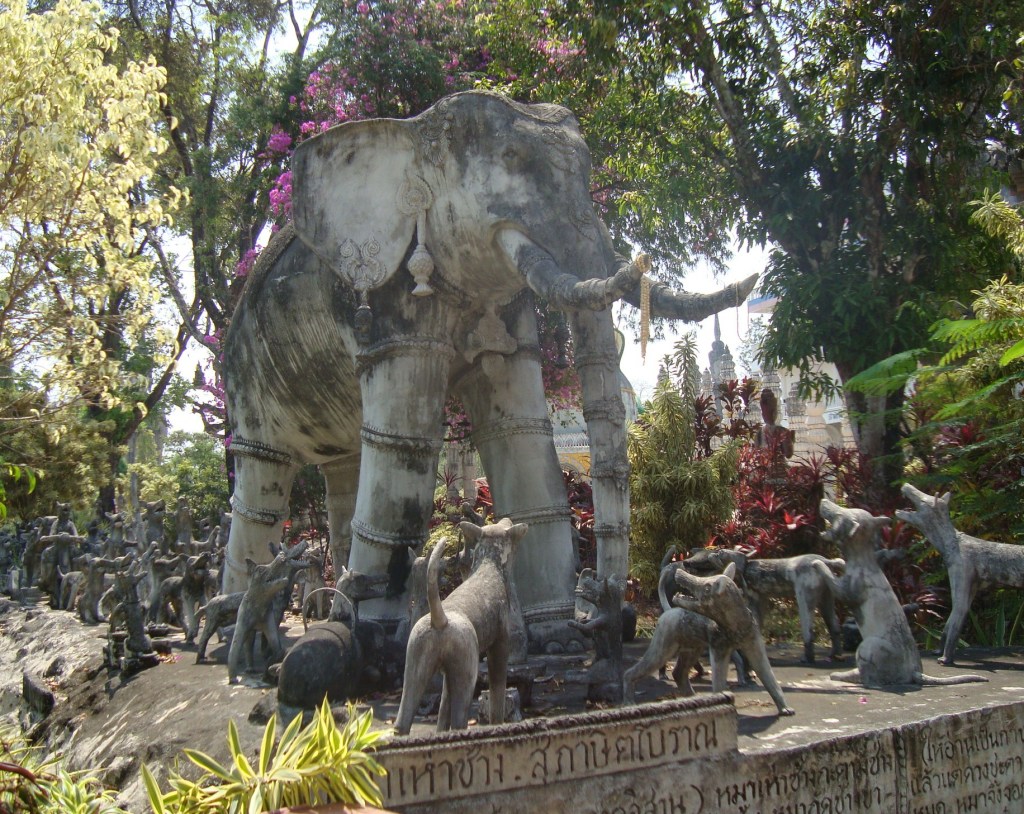
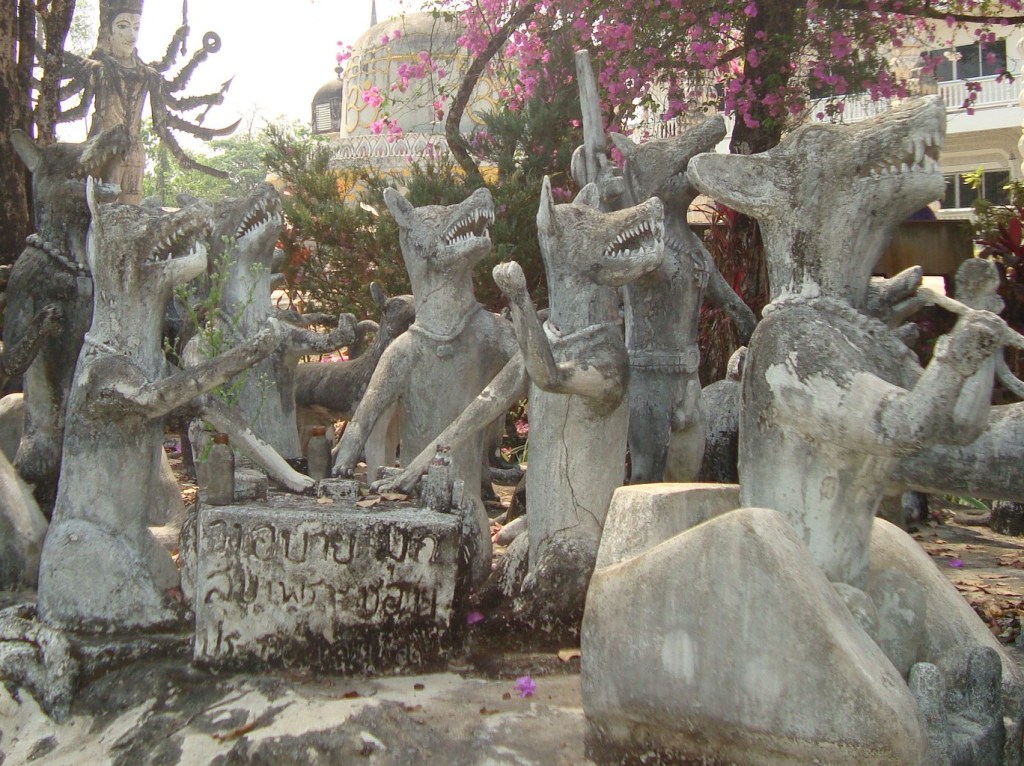
Gambling dogs
The greatest sculpture of all is the Wheel of Life at the far end of the park. Life in Luang Pu’s view, is a cycle of influences and phases, which start at one’s conception and end at one’s death.

The sperm enters the jaws of life 
Your birth 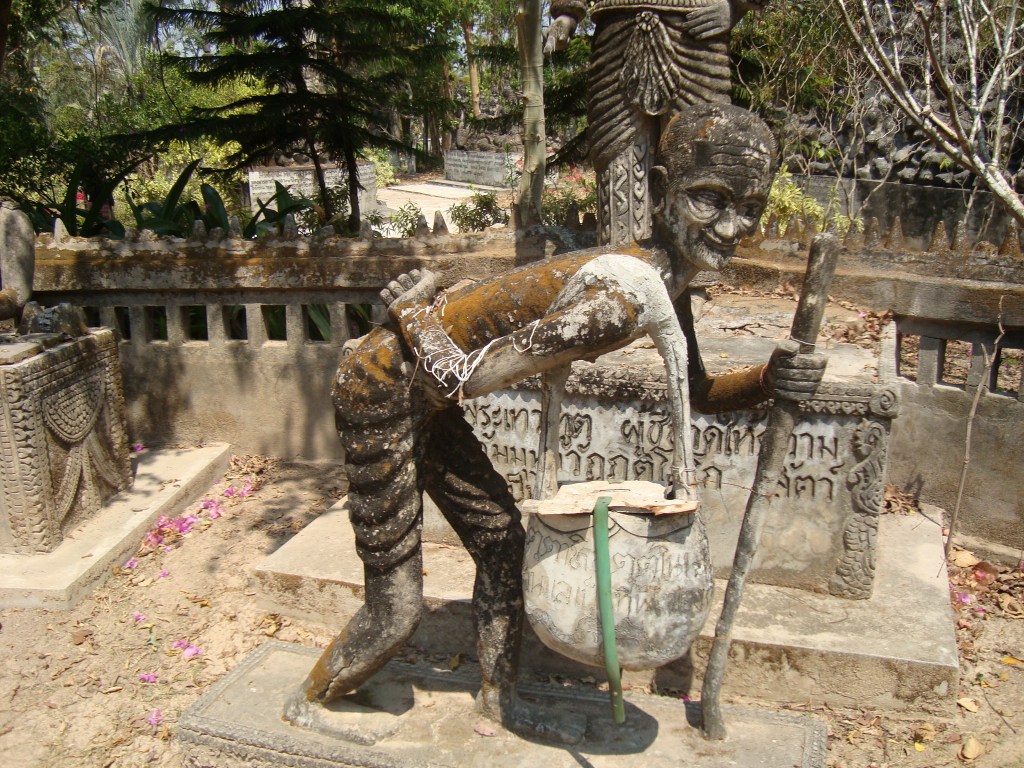
your ageing process 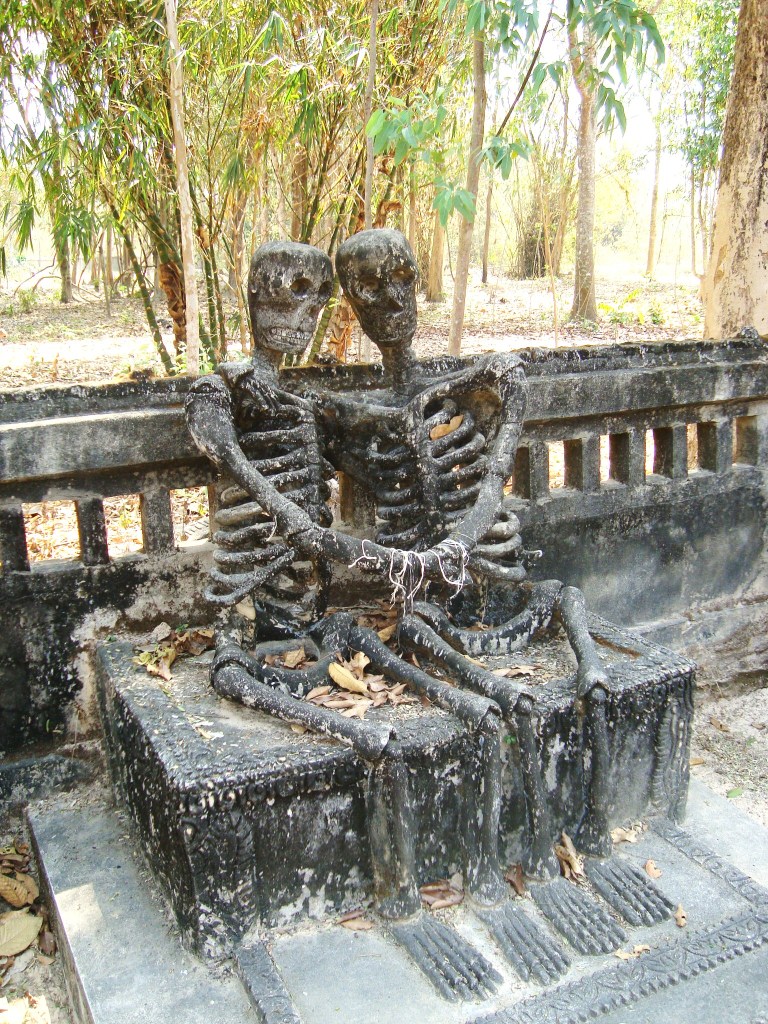
The death of love 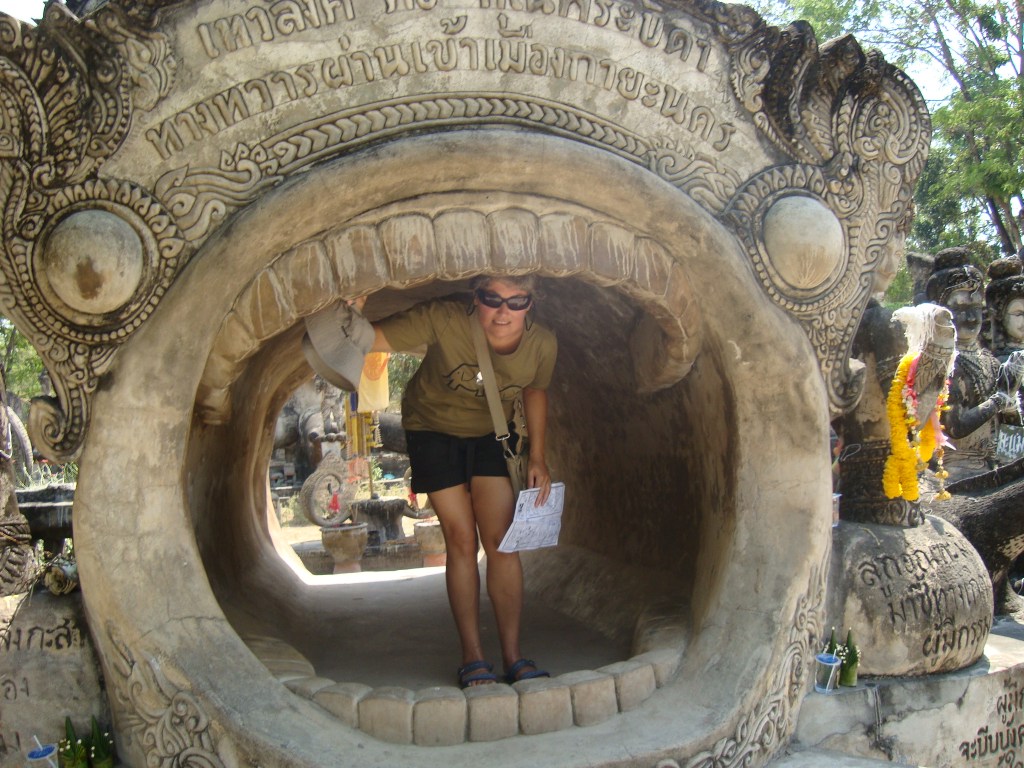
leaving the wheel 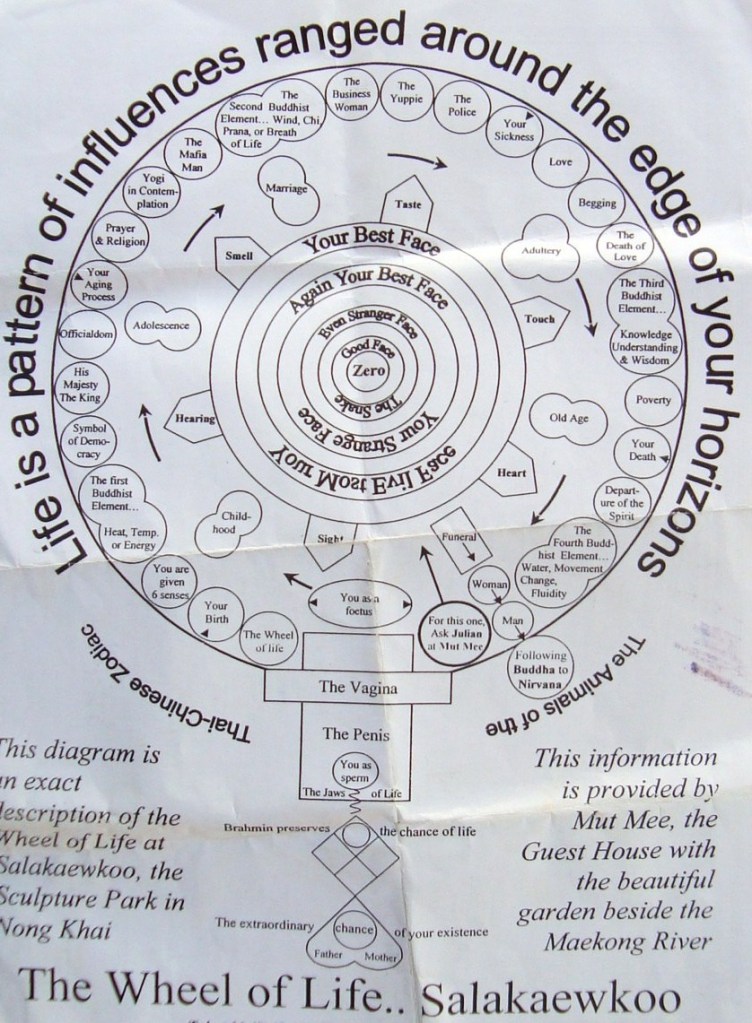
The Buddhist elements of heat, breath, wisdom and change are represented, as are the stages of birth, aging, suffering and death. Finally, one follows the Lord Buddha over the wall of life to nirvana.
The main shrine building is full of framed pictures of Hindu and Buddhist deities, temple donors and Luang Pu at various ages. Some of these pictures have been “touched up” giving him a Groucho Marx heavy eyebrow style……quite bizarre. Many of his every day objects are still in the shrine, the bed that he was nursed in as he aged, his unplumbed plastic bath and his wheelchairs. His mummified body is still under a glass hemisphere and ringed by flashing lights in true Hindu style. (See pic). Disciples claim his hair still grows and must be cut once in a while!
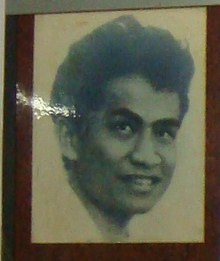
Luang Pu Boun Leua Sourirat 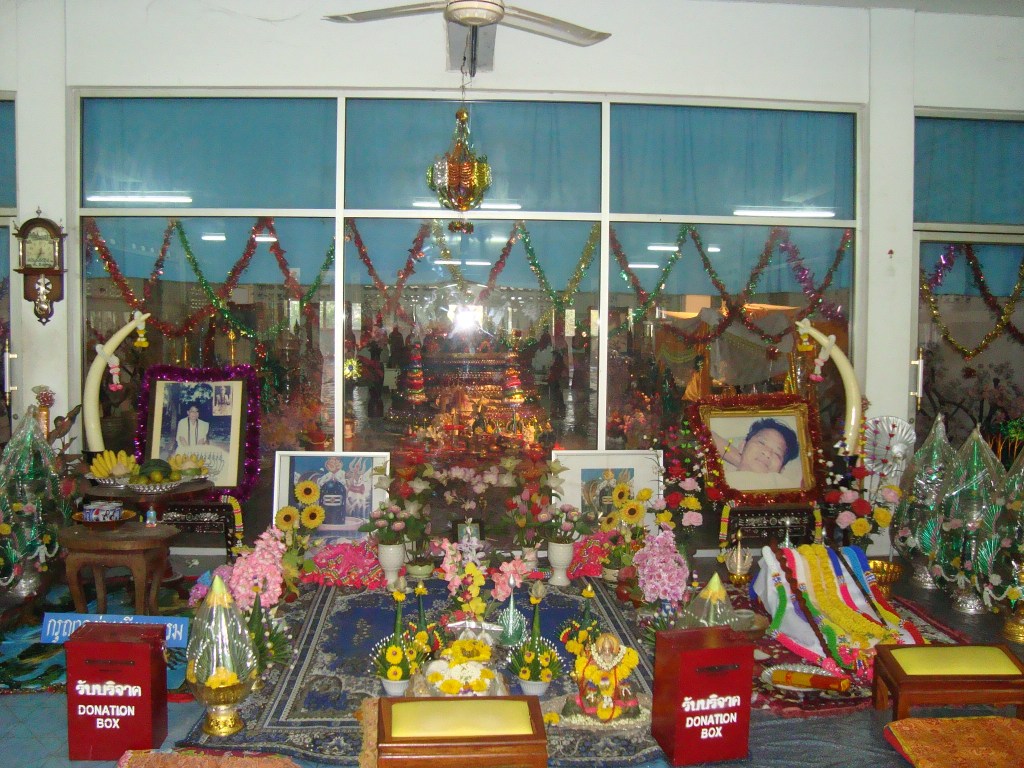
Luang Pu Boun Leua Sourirat lies in state under the glass dome at the back
If there is an “after life” we think that Luang Pu is up there having a beer with the likes of Gaudi, Picasso, Dali, Dahl, Miro and other artists who had big unconventional ideas and followed their dreams.
 Cheryl & Neil Our Story
You must be logged in to post a comment.